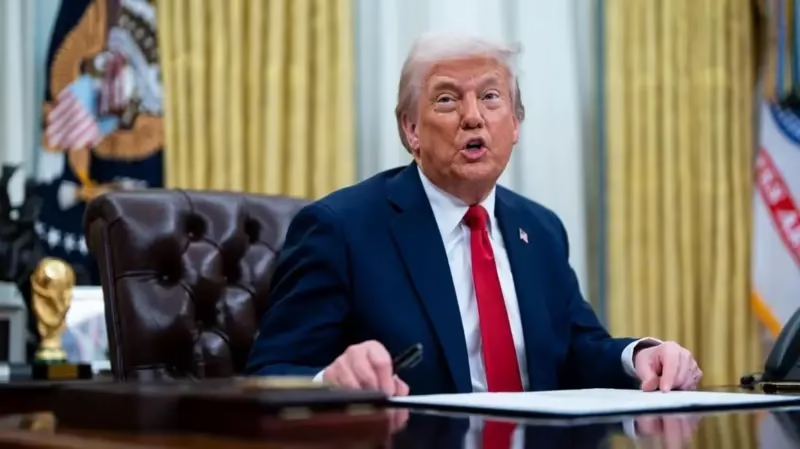
U.S. President Donald Trump has introduced a new policy requiring companies to pay an annual fee of $100,000 to employ foreign workers through the H-1B visa program, a system that has long been central to the recruitment of international talent in America’s technology and research sectors.
The H-1B visa allows firms to sponsor highly skilled professionals including scientists, engineers, and computer programmers for an initial period of three years, with the option of extending to six years. It has historically been a pathway for thousands of foreign specialists, particularly from India and China, to work in the United States.
Announcing the new fee, Trump argued that the measure would push companies to sponsor only individuals with rare and exceptional expertise, rather than using the program for routine staffing needs.
The decision has triggered mixed reactions. Critics contend that H-1B visas threaten the employment prospects of American workers by enabling firms to hire cheaper foreign labor. On the other hand, supporters including Tesla and SpaceX CEO Elon Musk maintain that the program is essential for keeping the United States globally competitive, particularly in advanced industries that require top-level skills.
The move is part of Trump’s broader immigration and labor reform agenda, which has frequently emphasized prioritizing American workers while tightening rules on foreign labor.

Sunday Buna Ibrahim is a seasoned journalist with Daily Frontier (dailyfrontier.com.ng), where he reports on security, conflicts, and humanitarian issues across Nigeria’s Middle Belt, particularly Plateau and Benue States. He also serves as a News Producer at Vision FM Radio in Abuja. Prior to joining Daily Frontier, he worked with Radio Nigeria, Fombina FM Yola in Adamawa State between 2019 and 2020.