
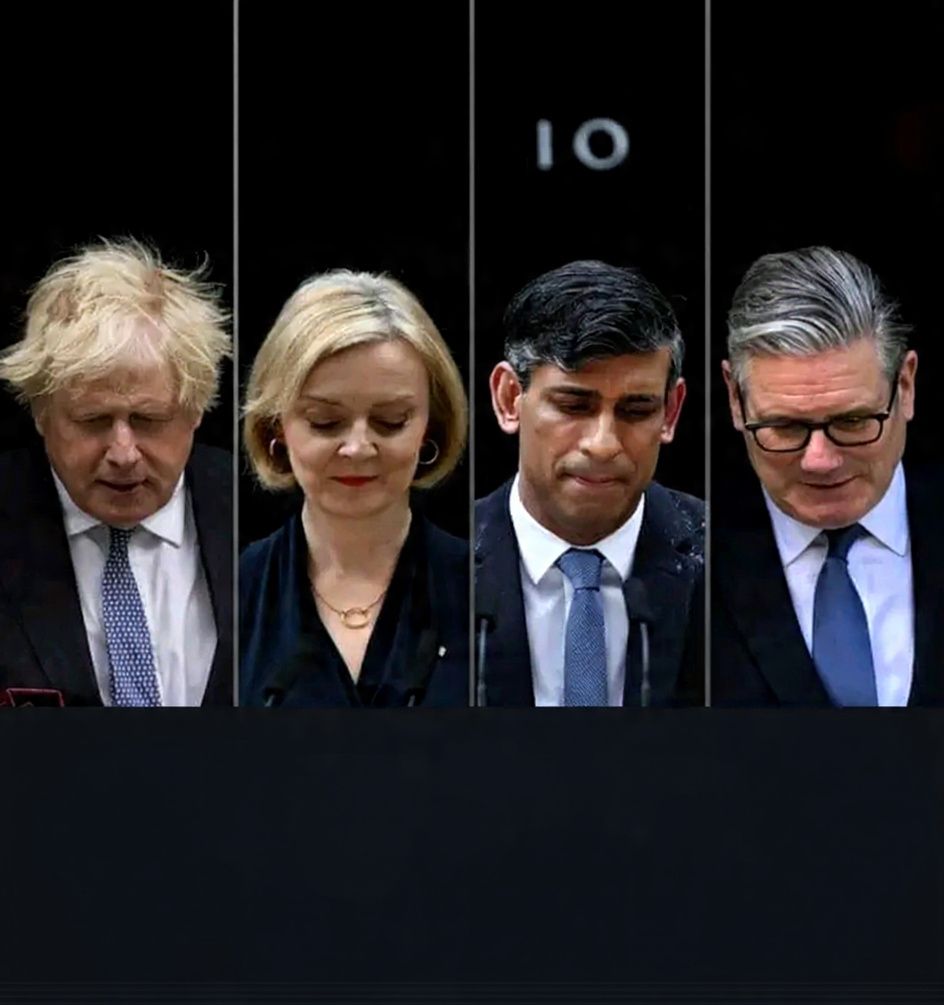
A Guardian analysis titled “The ungovernable country? Why Britain keeps losing prime ministers” examines why recent UK leaders have struggled to stay in office for long periods, pointing to deeper structural and political instability rather than individual failures alone.
The article notes that successive prime ministers – ranging from Boris Johnson to Liz Truss, Rishi Sunak, and now Keir Starmer – have faced unusually short and turbulent tenures. It argues that Britain’s political system is increasingly marked by instability, with leaders often overwhelmed by economic pressure, internal party conflict, and public dissatisfaction.
According to the analysis, governments have repeatedly failed to deliver long-term reforms, instead becoming focused on short-term survival and crisis management. This has led to frequent leadership changes, policy reversals, and weakening public trust in political institutions.
The piece also compares modern Britain’s situation to historical examples such as France’s Fourth Republic, suggesting that fragmented politics, rising populism, and deep social divisions are making it harder for any prime minister to maintain authority for long.
Ultimately, the commentary suggests that the issue may not simply be the individuals in power, but the broader political system itself – described as increasingly difficult to govern in a stable and consistent way.

The Daily Frontier Editorial Board is committed to delivering credible, balanced, and timely journalism that informs, educates, and empowers the public. Made up of experienced editors, reporters, and media professionals, the board oversees the platform’s editorial direction, ensuring accuracy, fairness, and professionalism in all published content across politics, security, business, entertainment, and public affairs.

