Lagos, Nigeria
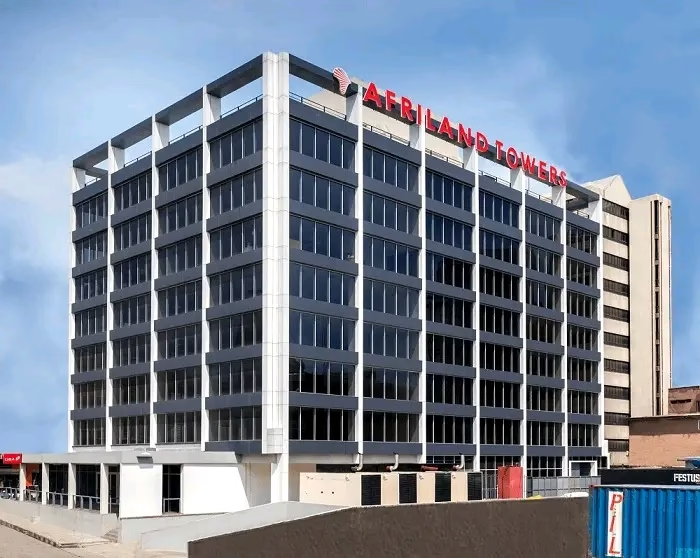
Tragedy struck the bustling financial district of Lagos Island on Tuesday when a devastating fire ripped through the six-storey Afriland Towers on Broad Street, claiming the lives of at least 10 people, including key employees from a major financial firm.
The blaze, which erupted around 1:30 p.m., has intensified calls for stricter fire safety measures in Nigeria’s high-rise commercial buildings amid ongoing rescue efforts and grief-stricken tributes.
Timeline and Outbreak of the Fire
The fire broke out on September 16, 2025, originating in the basement’s inverter room of the multi-storey structure, which houses several prominent organizations, including the Federal Inland Revenue Service (FIRS) on the upper floors and United Capital Plc on the third and fourth levels. Eyewitnesses and preliminary reports suggest the inferno may have been sparked by an inverter explosion, a common power backup system in Nigeria’s often unreliable electricity grid.
Thick black smoke billowed into the sky, engulfing the building and triggering widespread panic among occupants and passersby. Some desperate individuals were seen attempting to flee through windows as flames rapidly spread upward, complicating evacuation.
The structure, a hub for financial and governmental operations, was teeming with professionals at the time, turning what should have been a routine workday into a scene of chaos and heroism.
Rising Death Toll and Victim Details
Initial reports on Wednesday evening confirmed four fatalities all FIRS staff members who succumbed to injuries sustained during the blaze.
By Thursday morning, the toll climbed tragically higher when United Capital announced the deaths of six of its own employees, bringing the confirmed total to 10. The victims from United Capital were described by the company as “integral members of our team,” whose loss has left an “indelible void.” Their names have not yet been publicly released, pending family notifications, but the firm has vowed to honor their memory with a forthcoming memorial service.
Among the survivors, at least nine individuals were pulled from the wreckage by emergency teams. Heartbreakingly, five of these were successfully revived on-site, while four others remained unconscious, with medical personnel working tirelessly to stabilize them. Additional escapes occurred without injury, but unverified accounts from witnesses and building insiders hint at the possibility of more casualties still unaccounted for, underscoring the scale of the disaster.
Rescue Operations and Emergency Response
A swift multi-agency response unfolded, involving the Federal Fire Service, Lagos State Fire and Rescue Service, and other first responders who battled the flames for hours. Their efforts were praised for saving lives under dire conditions, with the Lagos State Fire and Rescue Service issuing a statement on Tuesday highlighting the complexity of the operation in a densely packed urban high-rise. Despite the heroism, challenges such as limited access points and the building’s electrical infrastructure hampered progress.
As of the latest updates, search and rescue operations persist, with teams combing through debris for any remaining trapped individuals. Attempts to obtain further statements from the National Emergency Management Agency (NEMA) and Lagos State Emergency Management Agency (LASEMA) were unsuccessful at the time of reporting, but officials have indicated that full-scale investigations into the fire’s cause and prevention lapses are underway.
Official Statements and Corporate Response
United Capital’s heartfelt statement captured the profound sorrow rippling through the affected community: “We are devastated by this unimaginable loss… Our thoughts and prayers are with the families during this incredibly difficult time.” The company pledged comprehensive support for the bereaved families, including financial aid and counseling services, and extended gratitude to the emergency responders who risked their lives.
No formal comments on the suspected inverter explosion have been issued by authorities, but the incident has reignited debates over fire safety compliance in Lagos’s aging commercial towers. Experts note that many such buildings rely on outdated or improperly maintained backup systems, a vulnerability exacerbated by frequent power outages.
Broader Implications and Ongoing Concerns:
The Afriland Towers fire not only disrupts daily operations for tenants but also serves as a stark reminder of Nigeria’s urban fire risks. Smoke plumes visible for miles disrupted traffic on Broad Street, a vital artery in Lagos’s Central Business District, and forced temporary closures of nearby offices. While property damage assessments are pending, the blaze’s basement origin suggests potential long-term structural concerns.
As investigations deepen, questions loom about regulatory enforcement and the adequacy of emergency drills in similar high-rises. Families, colleagues, and the nation mourn, but amid the loss, stories of survival and solidarity emerge—fueling hopes for systemic change to prevent future tragedies.
Updates will follow as more information becomes available from official sources.

Daily Frontier is committed to being a trusted source of accurate and timely news, offering in-depth coverage of current affairs, emerging trends, and critical issues shaping today’s world