
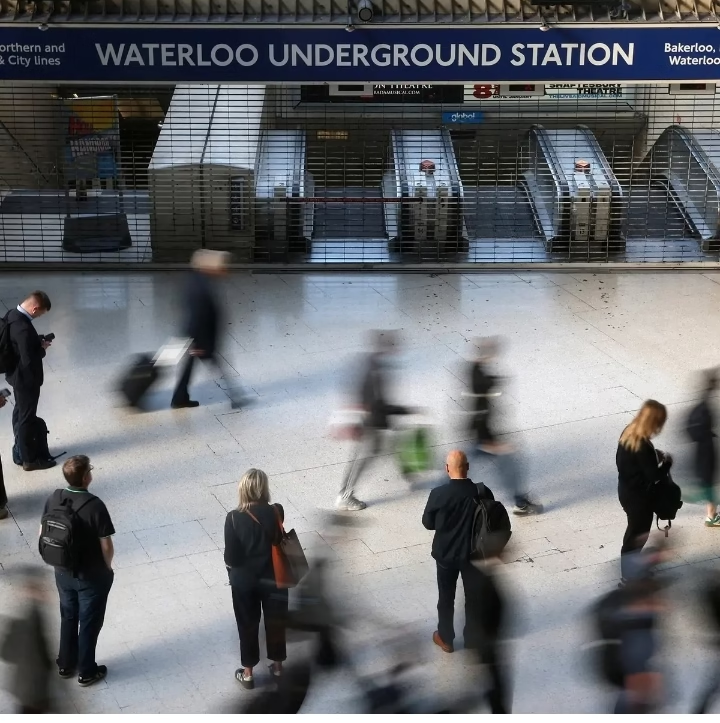
LONDON — The start of a four-day strike across London’s Underground system on Monday forced millions of commuters to find alternative routes, creating long delays on the roads, overcrowded buses, and a surge in demand for cabs and bicycles.
The industrial action, called over pay and working conditions, brought large parts of the Tube network to a standstill. While the strike was less disruptive than some in the past thanks to the growth of remote working, wider availability of e-bikes, and new transport links like the Elizabeth Line many Londoners still faced significant challenges getting to their destinations.
“It’s just annoying,” said Blake Andrews, 42, an engineer who endured a lengthy commute and admitted he might work from home later in the week to avoid the hassle.Others faced more serious consequences. In Islington, north London, Dilek Mustafa, 54, worried she might miss her chemotherapy appointment after already traveling for 90 minutes with another 40 minutes still to go.
“I knew it was going to be late but not this late,” she said.Crowds formed at bus stops across the capital, with passengers jostling for limited space. Denyse Mohan-Patel, waiting near Angel station, said she had missed her train to Waterloo a nonrefundable ticket because of the delays.
Despite the frustration, Transport for London officials said the city had adapted more smoothly than during previous strikes. But with three more days of industrial action ahead, many commuters were bracing for further disruption.

Daily Frontier is committed to being a trusted source of accurate and timely news, offering in-depth coverage of current affairs, emerging trends, and critical issues shaping today’s world