
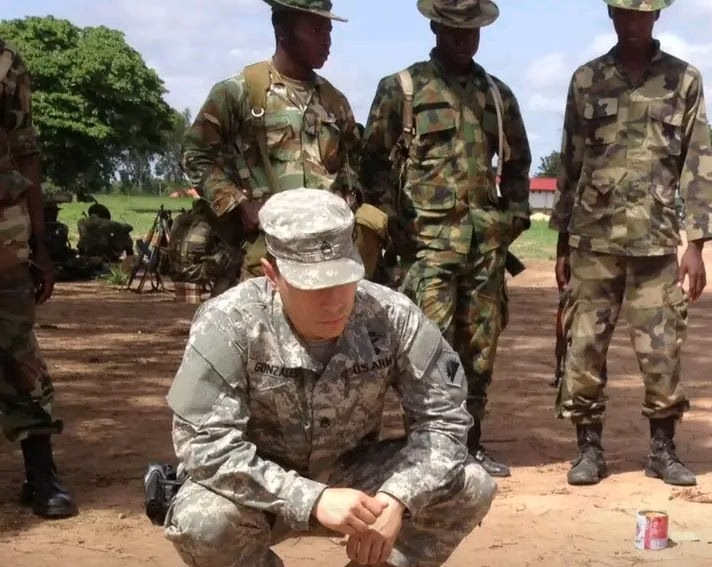
Nigeria has recorded a spike in abductions and armed attacks across several states, even as President Bola Tinubu approved the country’s delegation to the US–Nigeria Joint Working Group aimed at strengthening bilateral security cooperation.
Members of the Nigerian contingent met with senior US officials, securing commitments for enhanced intelligence sharing, humanitarian support, and defence assistance. According to government sources, the partnership is expected to bolster counterterrorism operations and improve rapid response capacities.
The renewed collaboration comes amid escalating violence. Recent attacks in Niger, Bwari, and Anambra resulted in multiple abductions and at least one fatality, heightening concerns about the safety of rural and peri-urban communities.
Former Minister of Education Obiageli Ezekwesili criticised the persistent corruption in defence spending, warning that the diversion of funds continues to leave frontline personnel poorly equipped to confront criminal groups. She urged the government to prioritise transparency and resource accountability to restore public confidence.
The administration maintains that its current security reforms focus on civilian protection, improved coordination among security agencies, and strengthening the resilience of remote communities facing recurrent violence.
Experts say the effectiveness of the US–Nigeria Joint Working Group will depend on how quickly promised support reaches troops on the ground and whether local communities receive early-warning systems, improved policing, and community-driven security structures.

Sunday Buna Ibrahim is a seasoned journalist with Daily Frontier (dailyfrontier.com.ng), where he reports on security, conflicts, and humanitarian issues across Nigeria’s Middle Belt, particularly Plateau and Benue States. He also serves as a News Producer at Vision FM Radio in Abuja. Prior to joining Daily Frontier, he worked with Radio Nigeria, Fombina FM Yola in Adamawa State between 2019 and 2020.